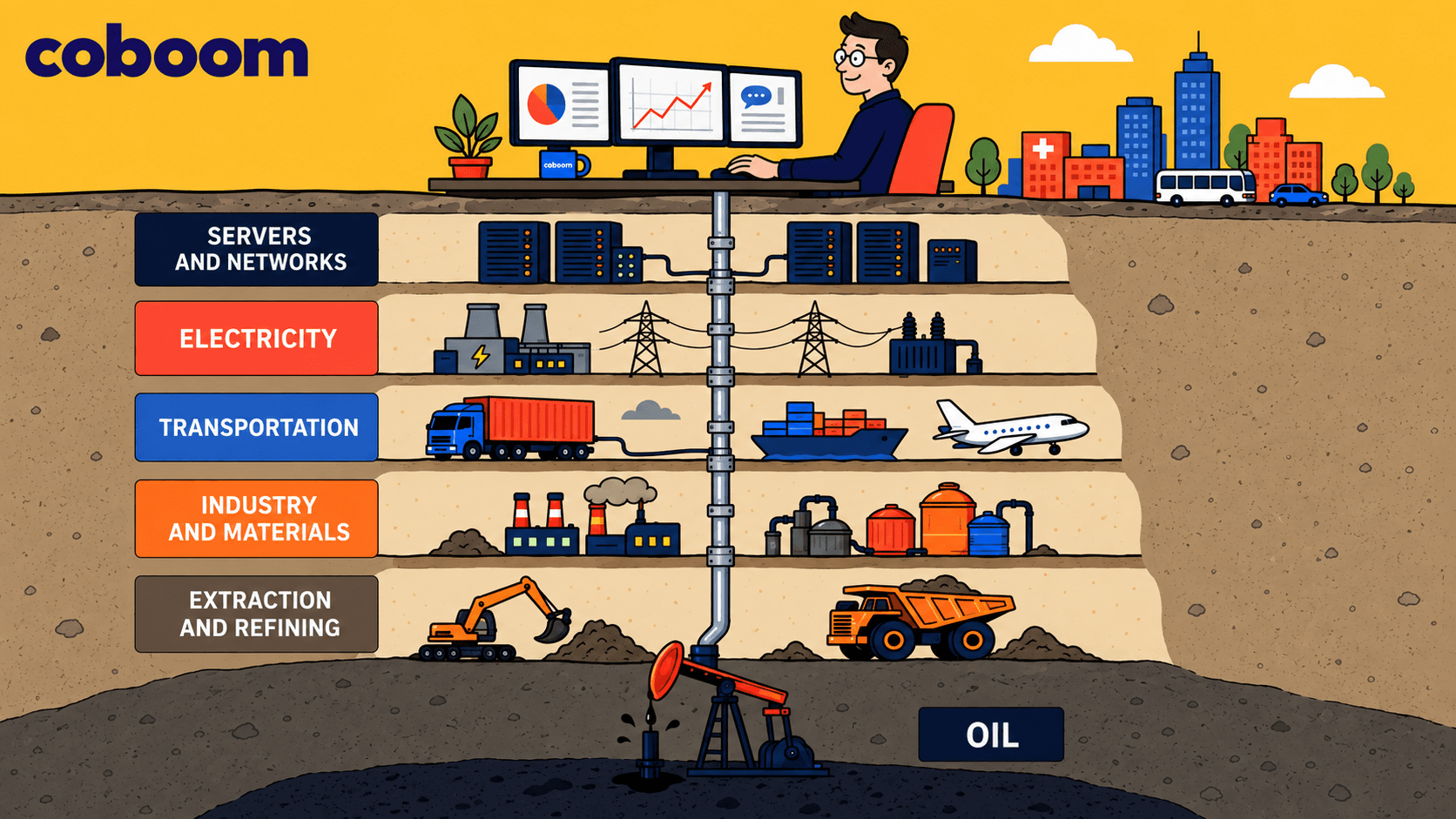
The real engine of economic growth has never been technology. It has always been energy surplus, and that surplus is precisely what is eroding today.
Without surplus energy, a society must devote most of its labor and resources to producing food, energy, and essential goods. It cannot support an army of knowledge workers, what I jokingly call “mouse pushers,” myself included, or maintain a large public sector.
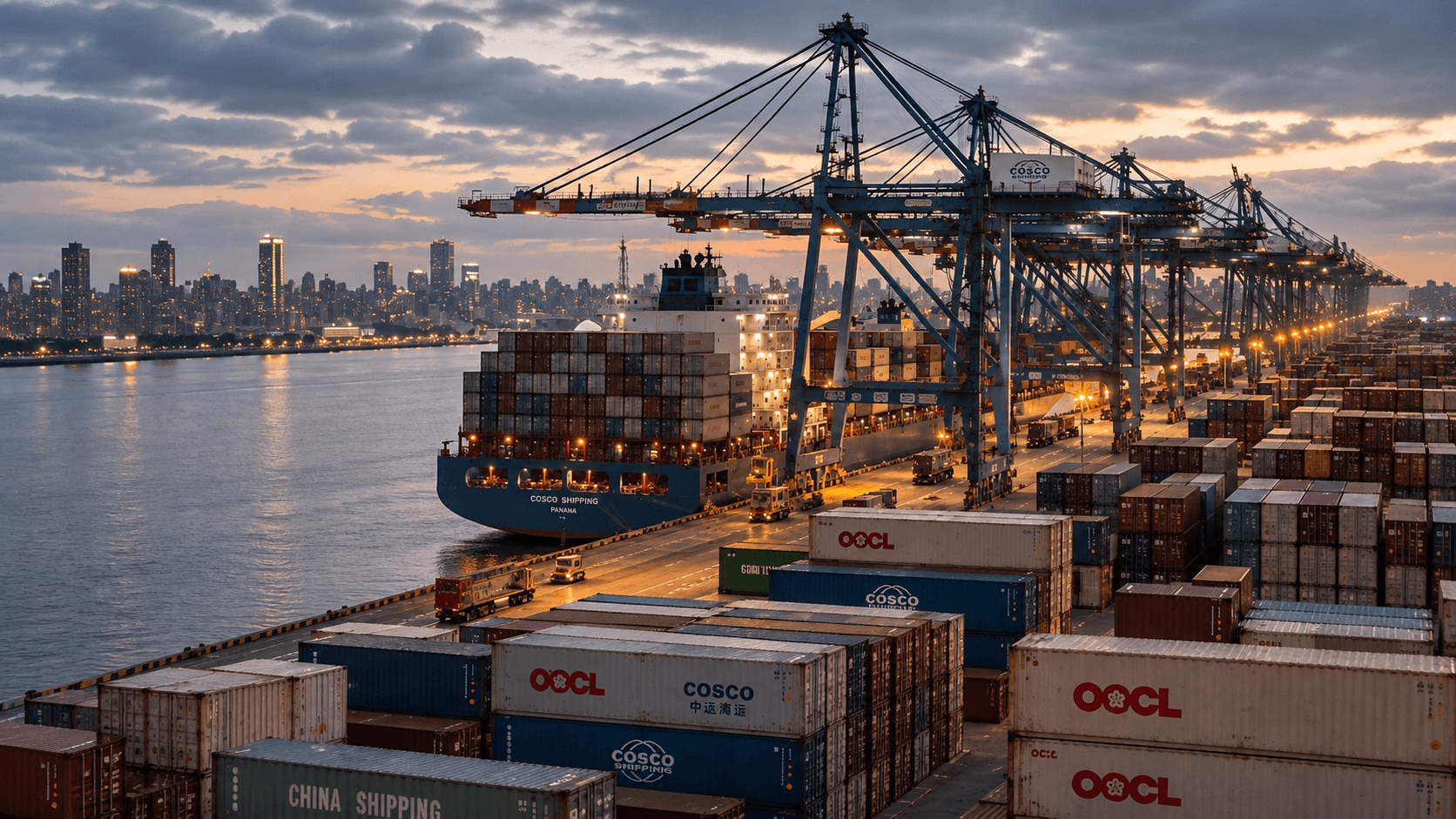
For more than a century, abundant and inexpensive energy, especially oil, allowed us to increase productivity, expand trade, stretch supply chains across the planet, grow cities, and improve living standards. We extracted the easiest and highest-quality resources first. Today, we drill deeper, process lower-quality resources, and build more infrastructure simply to produce each additional unit of energy.
Energy Return on Investment, or EROI, measures how much energy we get back for every unit of energy invested. In the middle of the 20th century, conventional oil delivered an EROI of roughly 75:1. Today, estimates for the broader oil supply and the global energy system are closer to 15:1, around the level some researchers consider necessary to sustain a highly complex economy.
EROI estimates vary significantly from one researcher to another, but they all point in the same direction. We are using a growing share of our energy simply to produce more energy, leaving less net energy available to manufacture goods, move people and freight, build housing, maintain infrastructure, and deliver services.
This constraint remains largely absent from political platforms and mainstream economic analysis. We talk endlessly about debt, interest rates, inflation, financial markets, and technology as though the economy could operate independently from the energy that makes every one of those activities possible.
Archaeologist and anthropologist Joseph Tainter, who studied the collapse of complex societies, understood this dynamic well. Societies respond to problems by adding complexity, and every additional layer of complexity requires more energy to build, operate, and maintain.
Technology is still widely presented as the miracle cure that will restart economic growth. Efficiency gains can indeed allow us to produce more with less energy, but the rebound effect, also known as the Jevons paradox, often gives those gains back by multiplying uses and increasing total consumption.
The energy surplus that powered two centuries of economic expansion is shrinking. At the same time, we keep building an economy that is more complex, more interconnected, and more energy-intensive.
The planet is no longer keeping up. The energy wall now confronting artificial intelligence is only one of the most visible examples.