At Coboom, we deliver about a hundred public talks each year on the economy and the long-term trends that have been reshaping it for decades. In those talks, we cover roughly a dozen of the more than 120 long-term trends our team tracks to understand the forces that will shape businesses and communities.
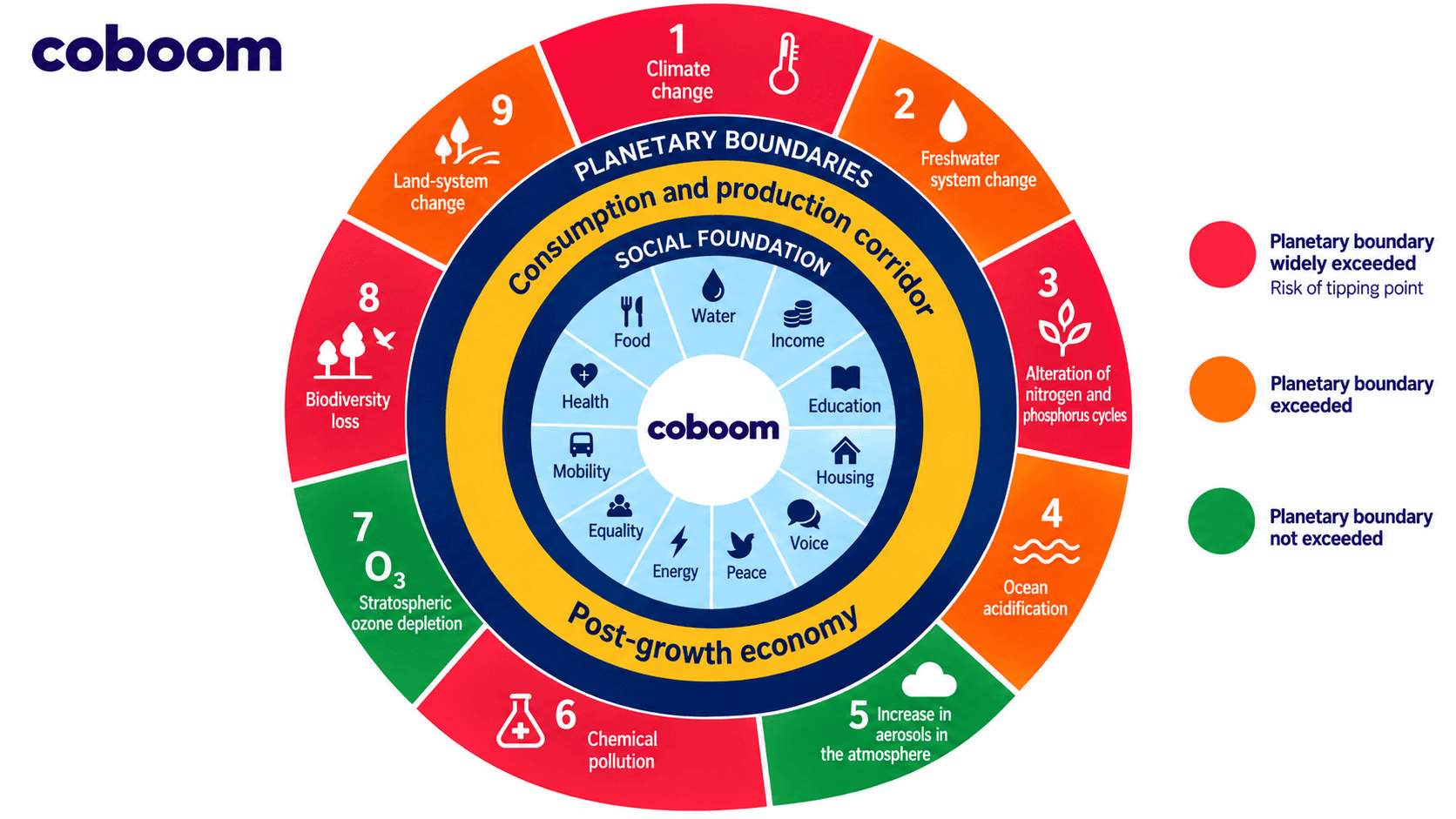
During these conferences, many participants come to realize that infinite growth on a finite planet is not simply an economic debate. A material economy that constantly demands more energy and resources will eventually collide with the planet’s biophysical limits.
Then, almost every time, the same scene unfolds during the break or after the presentation. One to three executives or managers, usually Gen X men approaching retirement, come up to thank us for saying out loud what they have already been thinking quietly.
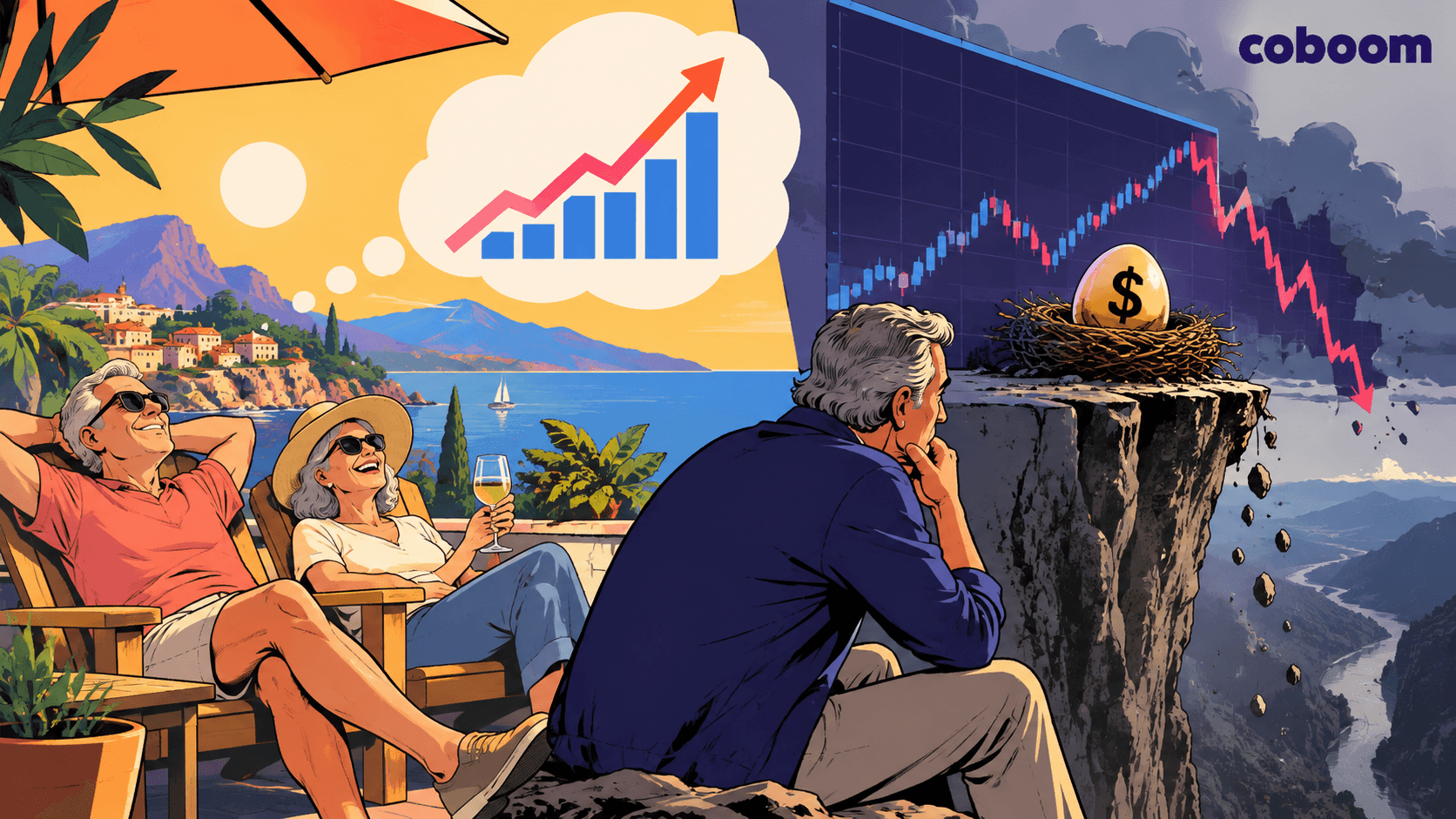
The conversation then quickly shifts to their investment portfolios. They accept that the real economy cannot grow forever, yet they still hope stock markets will keep rising for another twenty years to finance their retirement.
We remind them that we are not financial planners and do not provide investment advice. Instead, we ask them a business question: would you pay more than twenty times EBITDA to buy a privately held company whose operations, risks, assets, and prospects you understood intimately?
The answer is almost always no. We then ask why they are willing to accept valuations at those levels for publicly traded companies, and why they are planning decades of retirement on the assumption that those valuations will keep rising in an economy facing growing energy, material, demographic, and geopolitical constraints.
That is usually when the silence sets in. Many realize they have applied a belief to their investments that they would immediately reject in their own business: markets went up in the past, therefore they must keep going up in the future.
Stock market history should have cured us of that certainty long ago. After peaking in 1929, the Dow Jones lost 89% of its value before bottoming in 1932 and did not recover its 1929 nominal peak until November 1954.
An entire generation can therefore live through a period in which actual returns diverge radically from projections built on the previous few decades. The financial future is no more guaranteed than the energy, material, or economic future.
The global economic center of gravity is also shifting. The United States now represents a much smaller share of the world economy than it did in the postwar era, reflecting a far more multipolar global economy.
At Coboom, we see a massive contradiction. We are beginning to accept that the real economy will have to operate within tighter limits, while continuing to build our retirement plans, public finances, and financial models as if asset values could grow forever above that same economy.
Financial markets do not float in a separate universe. Over the long term, they remain tied to companies that must produce, sell, invest, pay wages, and use energy and materials in the physical world.
Preparing for the world ahead therefore requires more than plugging a new return assumption into a spreadsheet. We need to build our businesses, communities, and personal finances around the same question of robustness: what happens when the future finally stops looking like the past?