Greenland is attracting growing attention from major powers for reasons that go far beyond geography. Its mineral resources, access to the Arctic, and military importance make it increasingly strategic in a world where supply chains are becoming more vulnerable and governments are seeking greater control over critical resources. In September 2026, the United States, Denmark, and Greenland signed a new agreement allowing an expanded U.S. military presence on the island.
Three long-term trends are reinforcing Greenland’s importance. The first is the expansion of renewable energy and electrification, which is increasing demand for critical minerals. The second is the rapid rise in military spending: in 2025, NATO members committed to investing 5% of GDP annually in defense and security-related expenditures by 2035. The third is the accelerating digitalization of the economy, particularly through the expansion of data centers and artificial intelligence.
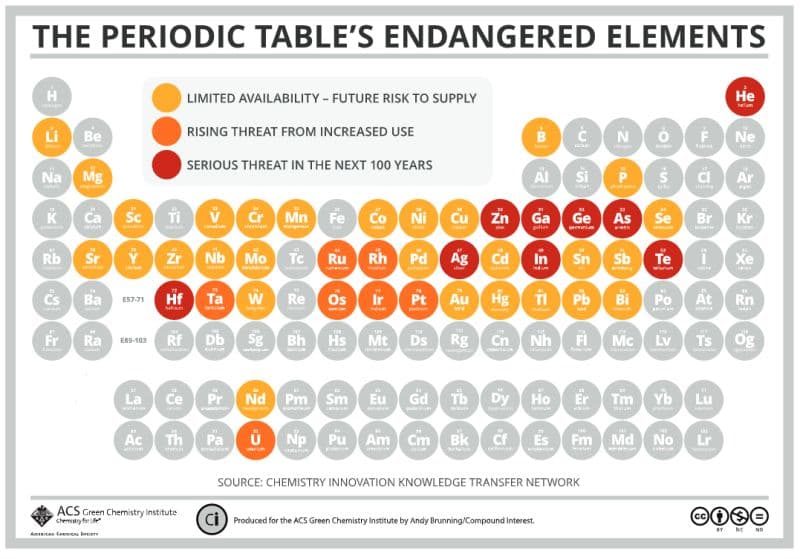
In this context, reducing dependence on China has become a strategic priority for the United States and several of its allies. China dominates global rare-earth production and an even larger share of processing. These materials are essential to permanent magnets, advanced electronics, satellites, renewable energy technologies, electric vehicles, and many defense systems.
Greenland has significant mineral potential, which helps explain its strategic importance. But it is important to distinguish geological resources from reserves that can actually be developed economically in the near term. Mining and processing resources in the Arctic remain technically difficult, capital-intensive, and environmentally sensitive.
Greenland also has potential offshore oil and gas resources. These are prospective resources rather than proven reserves ready for production, but their existence adds another strategic dimension at a time when access to energy and raw materials is becoming more closely tied to national security.
Greenland therefore sits at the intersection of several major issues: Arctic security, defense, energy, critical minerals, and supply chains. U.S. interest cannot be reduced to a single motivation, but reducing strategic dependencies and securing access to resources clearly form part of the broader geopolitical context. The 2026 agreement also reflects Washington’s desire to strengthen its military position in the Arctic amid growing Russian and Chinese activity.
For Canada and Quebec, this deserves close attention. Our territory also contains major freshwater resources, critical minerals, energy resources, and other strategic assets. In a world where these resources carry greater geopolitical value, they are also more exposed to economic and strategic power struggles.
Water is part of this equation as well. In 2022, researchers associated with the Stockholm Resilience Centre concluded that the planetary boundary for freshwater had been exceeded after incorporating changes in “green water,” including soil moisture available to plants and ecosystems.
For us, the issue is not to predict that a major power will attempt to seize Canadian resources. It is to recognize that energy, minerals, freshwater, and territory are once again becoming strategic assets in a more constrained world.
That reality should push us to rethink the robustness of our businesses and territories. Which resources should we protect? Which dependencies should we reduce? Which capabilities should we develop now to preserve greater room to manoeuvre as geopolitical power struggles intensify?