Barriers are rising, trade threats are multiplying, and tariffs are once again at the center of Canada–U.S. relations. What many see as a break from decades of cooperation can also be understood through the lens of realpolitik: when power struggles intensify, governments tend to place greater emphasis on their own economic, industrial, and strategic interests.
For Quebec businesses, the issue goes far beyond one president or one trade dispute. Quebec is operating between two major economic powers pursuing their own interests, while the Canadian economy continues to face a persistent productivity gap with the United States. This makes Quebec companies more vulnerable when supply chains fragment, costs rise, or access to key markets becomes less predictable.
Continuing to build our strategies on the assumption that the trading environment will soon return to stability is becoming increasingly risky. In a world marked by instability and confrontation, two complementary capabilities deserve greater attention: robustness and resilience.
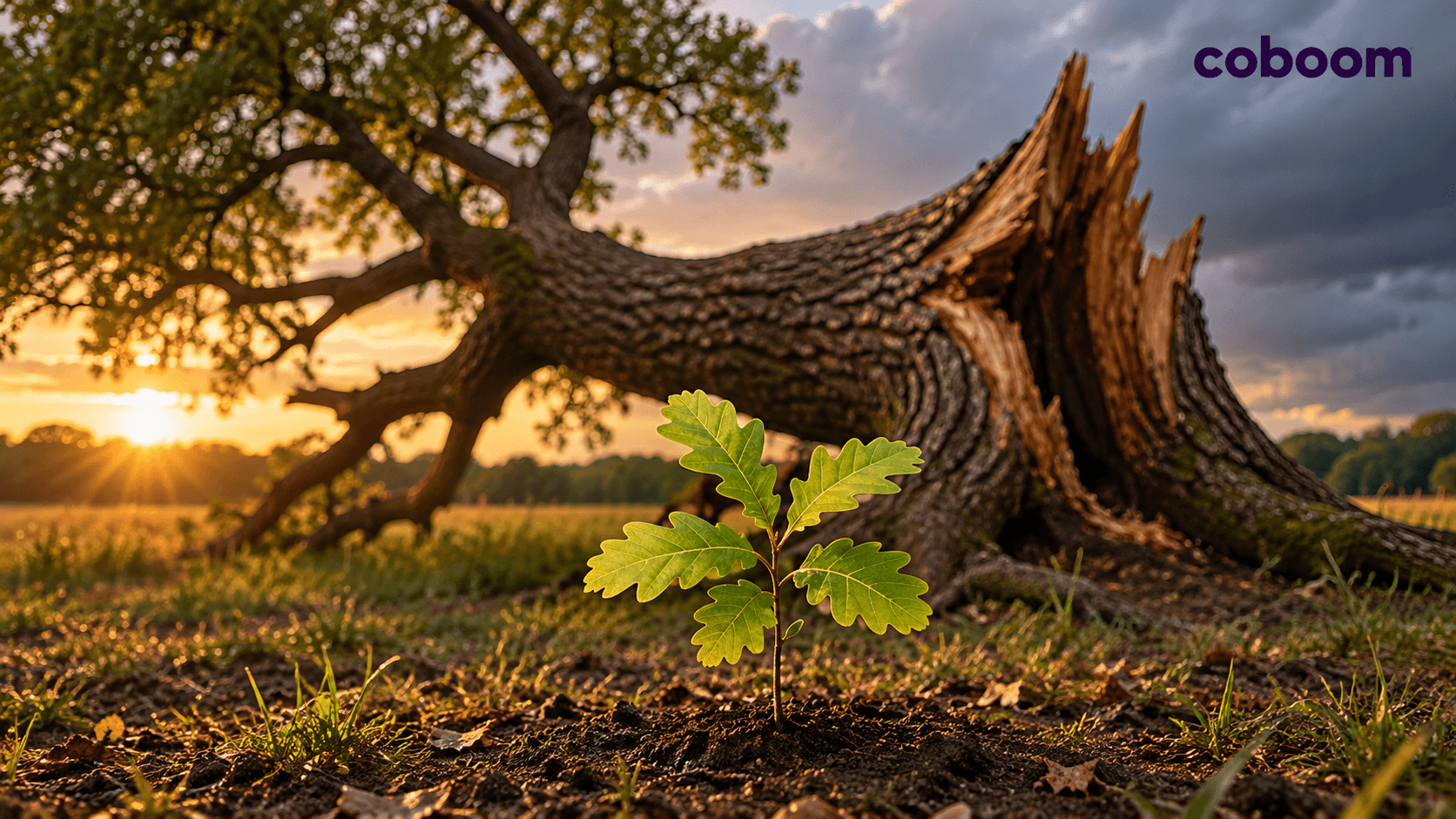
Robustness is like an oak tree. It allows a company to remain standing through shocks by maintaining room to manoeuvre, reducing critical dependencies, developing alternative suppliers, protecting financial health, and preserving operational capabilities. But even a strong oak can eventually break when a shock exceeds what it was built to withstand.
Resilience works differently. It is not simply the ability to return to the previous state after a crisis. It is the ability to transform when the old model no longer works. If the oak falls, its seed allows a new tree to grow under different conditions. In the same way, a resilient company can leave certain markets, rethink its business model, relocate activities, or build new capabilities rather than trying to recreate exactly what existed before.
For us, the time has come to revisit many of the assumptions that have shaped Quebec’s economic development over the past several decades. Simply hoping the storm will pass is no longer enough. Businesses, municipalities, and economic development leaders need to determine what they should maintain, adapt, develop, and sometimes let go of in order to become more robust while preserving their capacity to transform.
This is not about predicting the next shock with precision. It is about understanding power dynamics and reducing our dependence on forces we do not control. Our founder, Jean-Pierre Dubé, who practiced aikido for several years, often uses this analogy: rather than trying to stop a stronger force head-on, we need to understand its movement and redirect its energy toward a new trajectory.
In the world that is taking shape, Quebec will not control the decisions made in Washington or Beijing. But it can choose to build companies and an economy robust enough not to depend entirely on them.